1,000 Songs: The 5GB Capacity That Redefined Portable Music 25 Years Ago
A quarter-century ago, Apple’s decision to prioritize hard drive storage over flash memory created a device that held a full music library in a form factor smaller than a deck of cards.
By Jian Chen ·
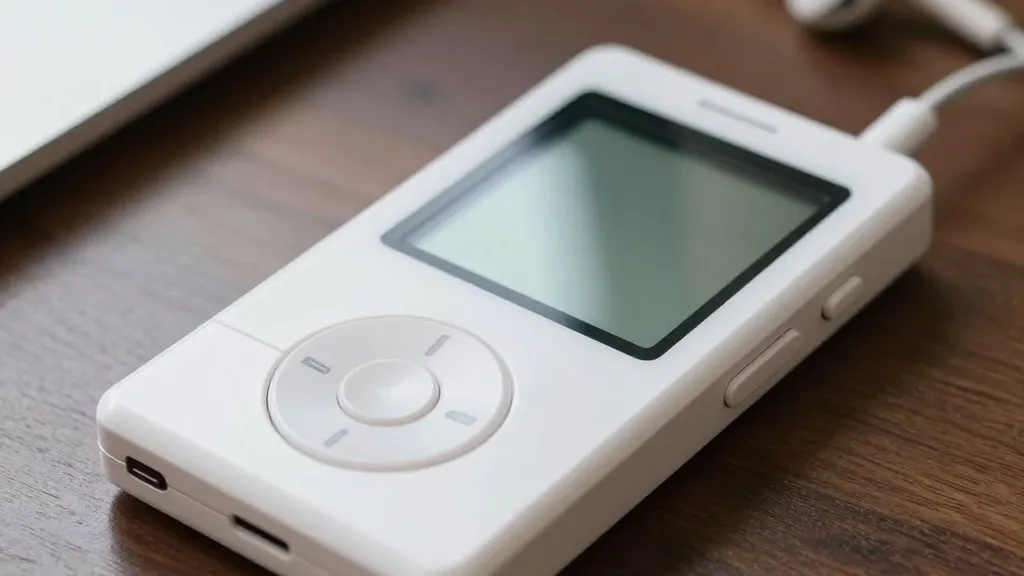
The defining specification of the device that launched on October 23, 2001, was its ability to store 1,000 songs in a pocket-sized enclosure. By leveraging a hard drive rather than the flash memory common to competitors, Apple offered a $399 player that could hold an entire personal music collection, a capacity that was previously impossible in such a compact form factor. This storage benchmark established the product’s core value proposition and set the standard for the portable audio market for the next decade.
The introduction of the original iPod occurred at a pivotal moment for Apple. In the years preceding the launch, the company had successfully navigated the post-dot-com bubble recession, stabilizing its fortunes with the introduction of Mac OS X and popular products like the iMac and iBook. CEO Steve Jobs positioned the Mac as the central hub for a user’s digital lifestyle, connecting various peripherals including cameras and DVD players. He identified portable music as the missing link in this ecosystem, noting that while competitors like Sony and Creative had attempted to enter the space, none had yet perfected the user experience.
Jobs argued that the market lacked a leader and that the hard-drive-based approach was the optimal entry point. At the time, four main types of portable audio solutions existed: CD players, MP3 CD players, flash-based players, and hard-disk jukeboxes. Apple selected the latter category to maximize storage capacity without sacrificing portability. The resulting device supported MP3, WAV, and AIFF formats with CD-quality sound, specifically calibrated to handle typical pop songs at 160Kbps.
The physical design relied heavily on components from Toshiba, which provided a 1.8-inch diameter hard drive that was only 0.2 inches thick. This component allowed the iPod to measure 2.4 by 4 by 0.78 inches and weigh just 6.5 ounces, making it lighter than most cell phones of that era. The device’s size was deliberately comparable to a standard deck of cards, emphasizing its portability and ease of carry.
Beyond storage, the device utilized FireWire 400 for both charging and data transfer, a choice that significantly reduced wait times compared to USB alternatives. Jobs demonstrated that transferring a full CD of music took only five to 10 seconds, whereas USB connections required approximately five minutes. Filling the entire 5GB capacity with 1,000 songs was estimated to take just 10 minutes, a stark contrast to the five hours required for equivalent USB devices.
The user interface was designed for single-hand operation, featuring an accelerated scroll wheel with piezoelectric tactile feedback. This allowed users to quickly navigate playlists, artists, or specific songs. The device also included 20-minute skip protection and a rechargeable lithium-polymer battery that provided 10 hours of continuous playback. An empty battery could be recharged to 80% within one hour.
The launch was synchronized with the release of iTunes 2, which introduced Auto-Sync capabilities. This feature ensured that the user’s curated music library on their Mac would automatically update on the portable device whenever it was connected. The integration of hardware and software created a seamless ecosystem that was difficult for competitors to replicate. The first song played during the on-stage demonstration was 'Building a Mystery' by Sarah MacLachlan.
Although the original iPod debuted 25 years ago today, its influence lasted well beyond its initial release. The first iPhone did not arrive until early 2007, meaning the two devices coexisted in Apple’s product lineup for over a decade. The iPod line eventually faded as smartphones matured, with the final model, the 7th-generation iPod Touch, released in May 2019. The product line was officially discontinued in May 2022, marking the end of an era defined by that initial 5GB breakthrough.
Source: Tom's Hardware